Short answer: For most London flats, a wall mounted split system is the best choice: quiet indoors, efficient, and able to heat as well as cool. Where only one outdoor unit is allowed, a multi split cools several rooms from it. If no outdoor unit is allowed, an all in one wall unit is the fallback.
Start with the type of flat, not the brand
Search results for the “best air conditioner” usually list brands. In London, the bigger question is what your flat and its building will allow. Islington shows the range well. The borough has 42 conservation areas covering around half its area, from the Georgian squares of Barnsbury and Canonbury to Highbury New Park, alongside large council estates and newer blocks around King’s Cross and the Angel. The Greater London Authority’s heat risk study also names Islington among the boroughs with higher heat risk for homes, partly because so many people live in flats.
Here is how the main system types match the main types of London flat.
| Flat type | Usually best fit | Watch out for |
|---|---|---|
| Converted Victorian or Georgian house | single or multi split, outdoor unit on rear wall or back extension roof | conservation area street rule, freeholder of a small block |
| Top floor or loft flat | split system sized for roof heat | long pipe run down the building |
| Mansion block | split with unit in a rear lightwell or on the roof, if allowed | strict leases, deep lightwells, noise |
| Council or housing association block | depends entirely on landlord policy | landlord consent, shared walls |
| New build tower | balcony unit or designed in system | building manager rules, cladding |
| No outdoor space at all | all in one wall unit | indoor noise, lower power |
Wall mounted split: the default for good reason
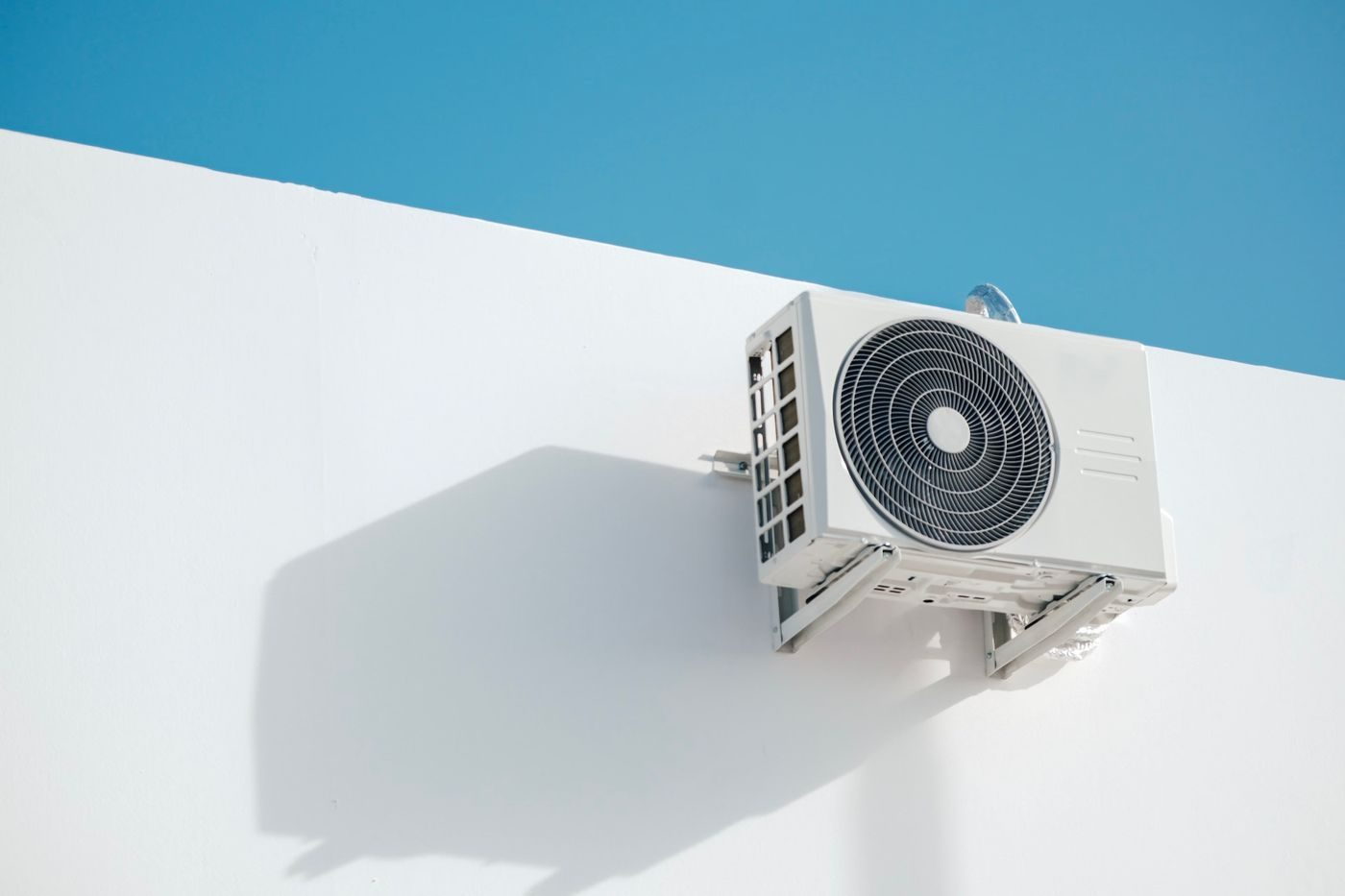
A split system keeps the compressor outside, so the indoor unit is quiet. It needs one small hole for pipes, it is efficient, and most modern units are reversible so they can heat in winter too. For one or two rooms in a converted house in Canonbury or Highbury, a split with the outdoor unit on the rear wall or a back extension roof is usually the best result for the money. See our split system page for how they work.
Multi split: when only one outdoor unit is allowed
Permitted development rules for heat pumps only allow one outdoor unit for a whole block of flats, and only if it is not used solely for cooling and the block is wholly flats (Planning Portal). Even where you apply for planning, freeholders and councils prefer one unit to several. A multi split runs two or more indoor units from a single outdoor unit, so a two bedroom flat can have both bedrooms cooled with one box outside. The trade off is that if the outdoor unit fails, every room loses cooling.
All in one: when no outdoor box is possible
If the freeholder or the council will not accept an outdoor unit, an all in one wall unit sits inside and vents through two holes about 15 to 20cm wide, according to the Energy Saving Trust. It still needs consent for the holes and is louder indoors. Our post on air conditioning without an outdoor unit goes through when it makes sense.
Portable units: a stop gap, not a fix
Portables are popular because you can buy one in a heatwave and carry it home. In a London flat they have real drawbacks:
- the exhaust hose carries hot air out but also lets warm air back in
- sash windows leave gaps that are hard to seal
- the compressor is in the room, so they are loud
- they take floor space in already small rooms
They are useful for renters who cannot get permission for a fixed system. For anyone who can, a split system is far more effective.
What makes a flat unit “best”
Once you know the type, compare models on these points:
- Night time indoor sound level: look for the quiet or night mode decibel figure.
- Cooling and heating output: sized for the room, including sun and roof heat.
- Efficiency ratings: SEER for cooling, SCOP for heating. Higher is better.
- Outdoor unit sound power: this drives the noise calculation at your neighbour’s window.
- Outdoor unit size: under 0.6 cubic metres matters if you are relying on permitted development for a block of flats.
- Controls: a timer and sleep mode are worth more than app gimmicks.
Sizing for a top floor
Top floor flats need more cooling than the floor area suggests. Heat comes through the roof all day and the London heat island keeps nights warm. The Met Office London City Pack puts the average July daytime high at 23.5°C, the highest in the UK, and notes the urban heat island effect adds to it. A unit that is fine on a first floor can struggle under a slate roof in Barnsbury.
Consent is part of choosing
The best system is the one you can get permission for. Before choosing, check:
- the lease alterations clause, or ask your landlord if you rent
- whether you are in a conservation area or a listed building
- where an outdoor unit could sit out of sight and away from neighbours’ windows
Our guide to freeholder consent covers what managing agents ask for.
Getting advice on your flat
We survey the flat, look at what the building and planning rules allow, and recommend the type that will work, not just the one with the best brochure. The flat air conditioning page explains the process, and the Islington area page has more on the local housing.
Quick questions
What is the best air conditioner for a small London flat?
A single split system in the room you use most, usually the bedroom, gives the best result. If you need two rooms, a small multi split with one outdoor unit saves space and paperwork.
Are portable air conditioners worth it in a London flat?
Only as a temporary fix. The hose leaks heat back in and rarely seals in a sash window, and the unit is noisy. A fixed system cools far better for the same electricity.
Which rooms should I cool first?
Bedrooms, because poor sleep is what most people notice in a London heatwave. Next is any room used for work during the afternoon, especially if it faces west.
Last updated 23 October 2026. Written for homes in London. Rules can change, so check the linked sources for the latest position.